

California marks 10 years since voter-approved cannabis legalization
Expungement and equity
Since legalization, California has led the nation in automatically clearing or reducing prior cannabis convictions, removing barriers that disproportionately impacted communities of color.
- According to the California Department of Justice, over 215,000 cannabis-related records have been cleared or reduced statewide
- Proposition 64 created pathways for resentencing and dismissal of past offenses
- Cannabis tax revenues continue to fund community reinvestment and equity programs
A robust regulatory framework
Under the Department of Cannabis Control, California oversees the entire supply chain — from cultivation to retail — with a focus on safety, accountability, and environmental protection.
Recent actions include:
- Strengthening product safety and testing standards
- Transitioning provisional licenses to annual licensure
- Streamlining regulations to support legal operators
To support a more sustainable legal cannabis market, state policymakers reformed the cannabis tax system to ensure the continued success of the legal industry. In 2022, Governor Newsom signed Assembly Bill 195 (Committee on Budget), which eliminated the onerous cultivation tax. And in 2025, the Governor signed Assembly Bill 564 (Haney), which reversed the scheduled increase to the state excise tax. These measures have worked to maintain adequate revenues to critical programs as the legal industry continues to develop. Since 2018, the California Department of Tax and Fee Administration has collected more than $7 billion in cannabis tax revenue supporting research, enforcement, and community programs.
Aggressive enforcement: $1.2 billion in illicit cannabis disrupted
California is proud of its work to aggressively dismantle illegal cannabis operations that threaten consumer safety, undermine the legal market, and harm workers and the environment.
In 2022, Governor Newsom established the Unified Cannabis Enforcement Task Force (UCETF) to enhance collaboration and enforcement coordination between state, local, and federal partners. Co-chaired by the Department of Cannabis Control (DCC) and the California Department of Fish and Wildlife (CDFW), the task force brings together more than 20 state partners to disrupt the illicit cannabis market.
Since then:
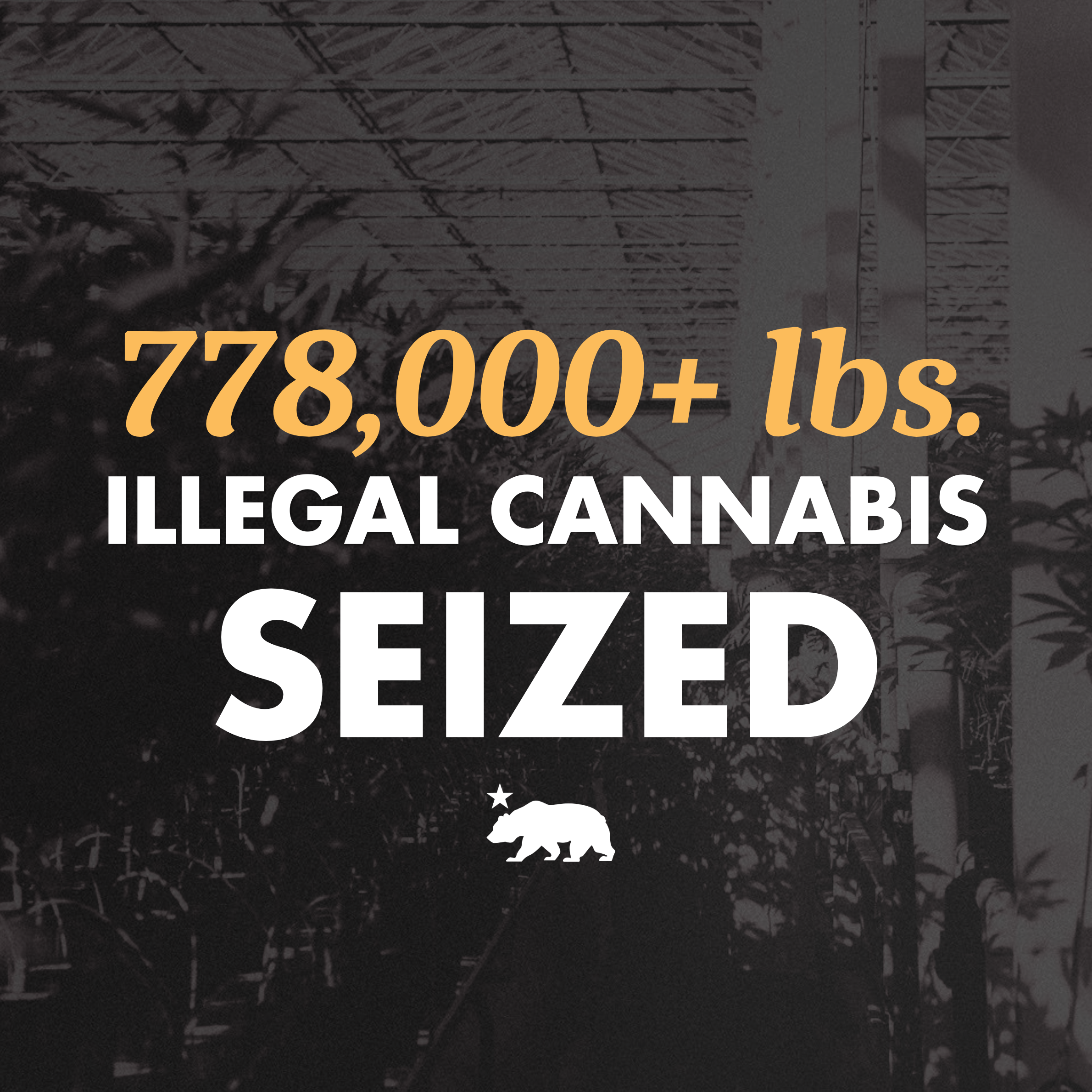
- 778,000+ pounds of illicit cannabis seized
- 1 million+ illegal plants eradicated
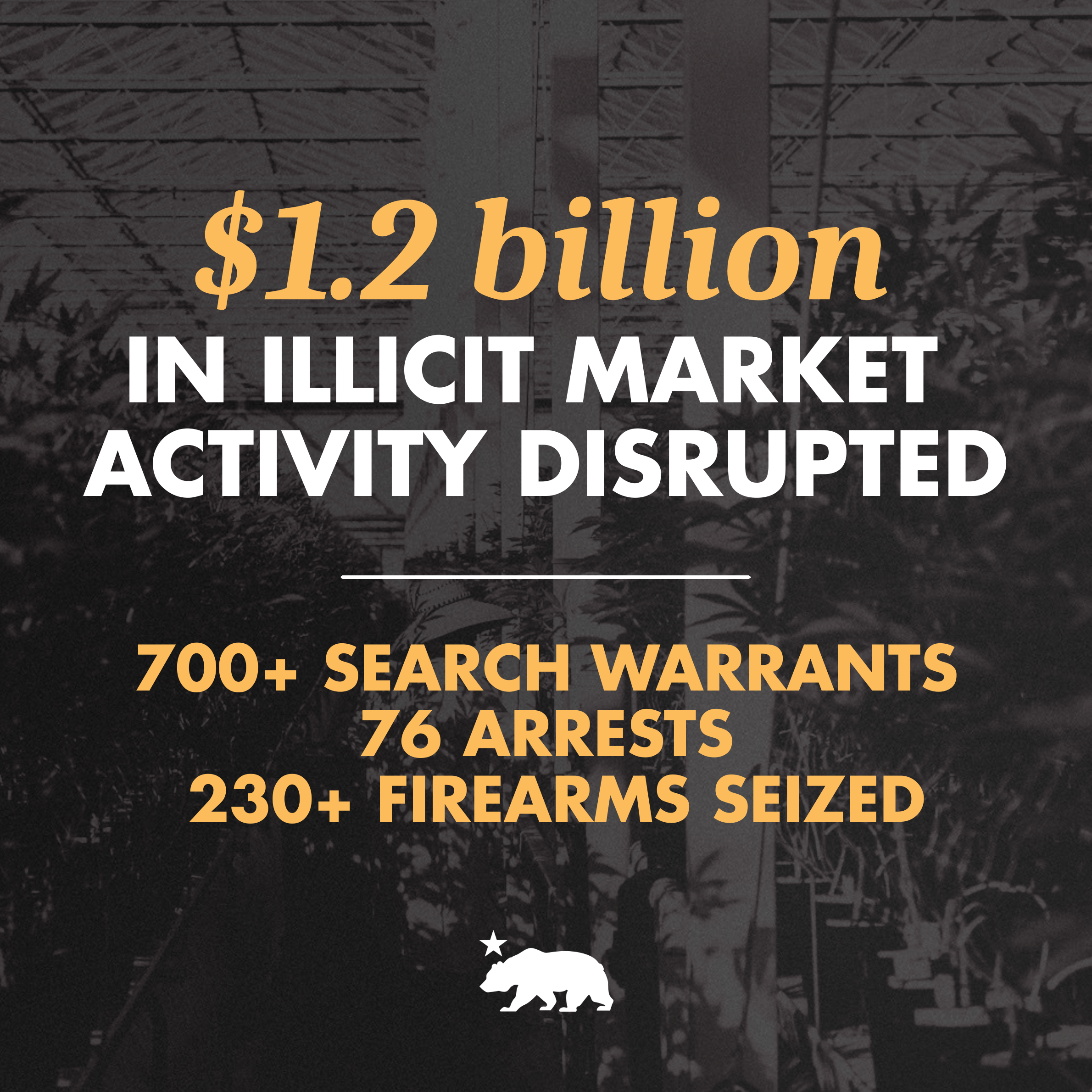
- $1.2 billion in illicit market activity disrupted
- 700+ search warrants, 76 arrests, 230+ firearms seized
“Illegal cannabis operations continue to pose serious threats to California’s environment and communities,” said CDFW Director Meghan Hertel. “But through coordinated enforcement operations like these, with support from partners across the state, we are working to protect and conserve California’s natural resources and ensure they’re available for future generations.”
In just the first quarter of 2026, operations seized more than $34 million in illegal cannabis.
While the task force serves as the state’s primary multiagency enforcement effort, local and partner agencies also carry out independent cannabis enforcement actions under their core authorities.
Additional statewide enforcement includes:
- 25.7 million plants eradicated and 1.88 million pounds seized (CDFW efforts)
- 1.5 million pounds seized and 2.5 million plants eradicated (DCC operations)
“The illicit cannabis market continues to threaten public safety, our environment, and the integrity of California’s legal industry,” said DCC Director Clint Kellum. “These coordinated efforts demonstrate the state’s commitment to holding illegal operators accountable and protecting communities across the state.”
Local agencies are also vital to California’s broad, multifaceted approach to disrupting the illicit cannabis market, carrying out both coordinated and independent enforcement efforts.
Investing in communities
State cannabis tax revenue is reinvested into communities statewide, supporting public safety, environmental protection, and other important programs. Through Proposition 64 grant programs, administered by the Board of State and Community Corrections (BSCC), hundreds of millions of dollars have been directed to local governments.
These investments support:
- Environmental protection and restoration efforts
- Public safety initiatives, including law enforcement and fire protection
- Community reinvestment and local programming
“The Proposition 64 grant program reflects California’s ongoing commitment to reinvest in community health and safety,” said BSCC Chair Linda Penner. “Through sustained support for local governments, this funding is strengthening enforcement efforts, disrupting illicit cannabis activity, and improving public safety outcomes across the state.”
Recent funding and impact:
- $125 million in new grant funding awarded
- Nearly $250 million distributed statewide across four cohorts
Prior grantees that used funds for enforcement activities eradicated almost one million illegal cannabis plants and seized 295 illegal firearms. In addition, 38,000 pounds of processed illicit marijuana were seized before reaching consumers.
Additionally, cannabis tax funds support natural resources through programs such as the Cannabis Restoration Grant Program operated by CDFW, which has awarded $75 million in grants to address environmental impacts associated with cannabis cultivation and support local partnerships.
Protecting California’s environment
Protecting California’s environment for future generations remains a priority as the state advances a safe, regulated cannabis market. State partners, including CDFW, California State Parks, and the State Water Resources Control Board, take coordinated action to address habitat damage caused by illicit cultivation and support responsible operators.
Since legalization:
- 350,000 pounds of trash removed
- 566,000 feet of illegal irrigation removed
- 221 illegal water diversions dismantled
Through restoration programs at State Parks:
- $90 million invested across 89 projects
- 150 illicit sites remediated
- 84,000 plants removed and 73,000 pounds of waste cleared
These actions help restore damaged landscapes, protect water resources, and prevent long-term environmental harm.
2,000 inspections to protect our water resources
Over the past decade, the Water Boards’ Cannabis Cultivation Program has expanded into a comprehensive regulatory and enforcement framework that protects California’s watersheds from the impacts of illegal cultivation while supporting responsible growers through its permitting programs.
Since its launch in 2014, the program has:
- Enrolled over 4,000 permittees, processed their water‑right registrations
- Completed more than 1,000 compliance visits
- Issued more than $3.5 million in administrative penalties
- Implemented over 165 enforcement actions, including cleanup and abatement and cease-and-desist orders
- Participated in more than 2,000 multi-agency inspections
- Supported hundreds of local criminal prosecutions.
Looking ahead
As the cannabis market evolves, California is addressing emerging challenges, including intoxicating hemp-derived products that fall outside the state’s cannabis regulatory framework. The Newsom Administration is advancing efforts to close these loopholes and ensure all intoxicating products meet consistent safety, labeling, and age requirements.
These efforts focus on strengthening safety and product standards, ensuring clear and accurate labeling and enforcing age restrictions across all intoxicating products. The California Department of Alcoholic Beverage Control (ABC) continues to play a key role in this effort.
Since 2024, the Department of Alcoholic Beverage Control has done the following to enforce states rules on intoxicating hemp products:
- Visited 20,806 locations
- Identified 157 violators
- Seized 7,300+ illegal products
- Achieved 99.25% compliance with state rules
Legal Disclaimer:
EIN Presswire provides this news content "as is" without warranty of any kind. We do not accept any responsibility or liability for the accuracy, content, images, videos, licenses, completeness, legality, or reliability of the information contained in this article. If you have any complaints or copyright issues related to this article, kindly contact the author above.
